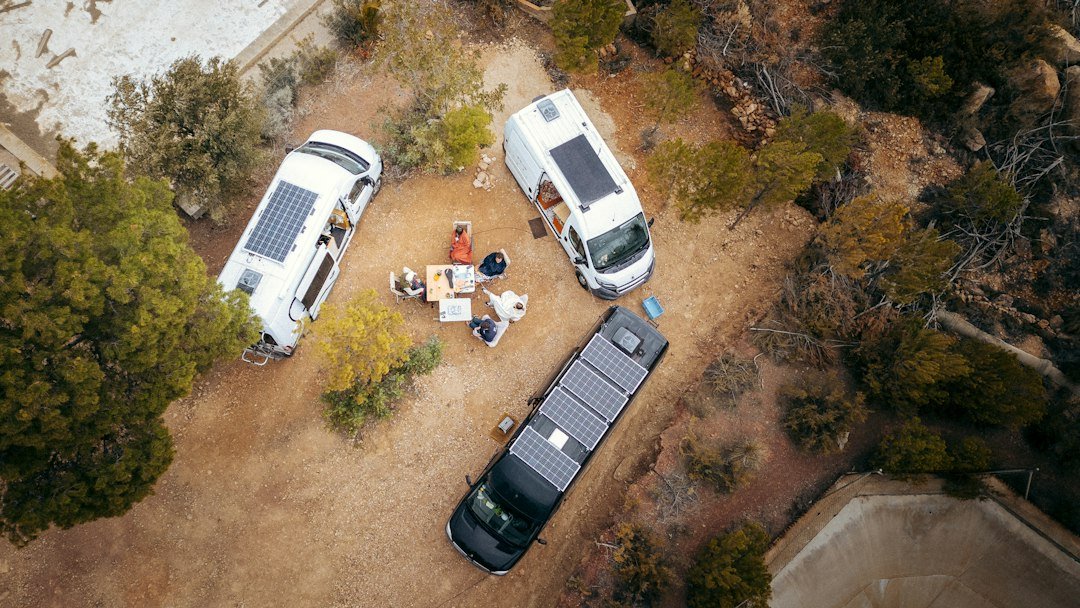
Still comparing camping sizes? Compare current BLUETTI power stations by capacity and use case →
Camping solar · Sizing guide
A camping solar generator only works well when the battery and solar array are sized together.
Start with daily energy use in watt-hours, then size the battery for overnight and cloudy-day reserve and size the solar panels for the energy you need to replace during daylight.
Quick answer: A “solar generator” is normally a portable power station paired with solar panels. For many vehicle-based campsites, a 1kWh battery with a few hundred watts of portable solar is a useful starting class. Multi-day camps with refrigeration, work equipment or several users may justify 2kWh or more. Measure your own Wh/day before buying.
First calculate how much energy your campsite uses
Use:
Daily energy (Wh) = Watts × Hours used per day
For cycling loads such as a portable fridge, measured Wh/day is more useful than the compressor’s nameplate watts. For phones, cameras and laptops, include the energy needed for the number of charges you expect each day.
If you have not built the load list yet, start with our best portable power station for camping guide to compare battery size, inverter output, weight and current BLUETTI picks before choosing solar-panel capacity.
How many watts of solar do you need?
A practical planning formula is:
Required panel watts ≈ Daily Wh ÷ Peak-sun-hours ÷ system-efficiency factor
The efficiency factor accounts for panel temperature, wiring, charging losses, imperfect angle and other real-world effects. Because weather varies, treat this as a planning estimate—not a guarantee.
Battery size and panel size solve different problems
Battery capacity
Determines how long your devices can run after sunset, under clouds or before the next recharge opportunity.
Solar array power
Determines how quickly you can replace energy during useful sunlight, subject to the power station’s solar-input limits.
Load power
Determines how much inverter output and port current are needed while appliances are actually running.
Useful camping solar-generator classes
| Class | Typical role | Solar strategy |
|---|---|---|
| 500Wh or less | Phones, lights, camera batteries and light electronics | Small portable panel; prioritize portability |
| About 1kWh | Car camping, laptop use, selected fridge loads, CPAP, lights and device charging | Often paired with roughly 200–400W of portable solar depending on daily use |
| About 2kWh | Multi-day base camp, RV support, larger refrigeration loads, remote work and several users | Larger solar array or multiple panels if daily energy use is high |
Best solar generator for camping: current BLUETTI options by battery class
For a broader brand-level comparison across camping, home backup and RV use, see our BLUETTI power stations and solar generators guide.
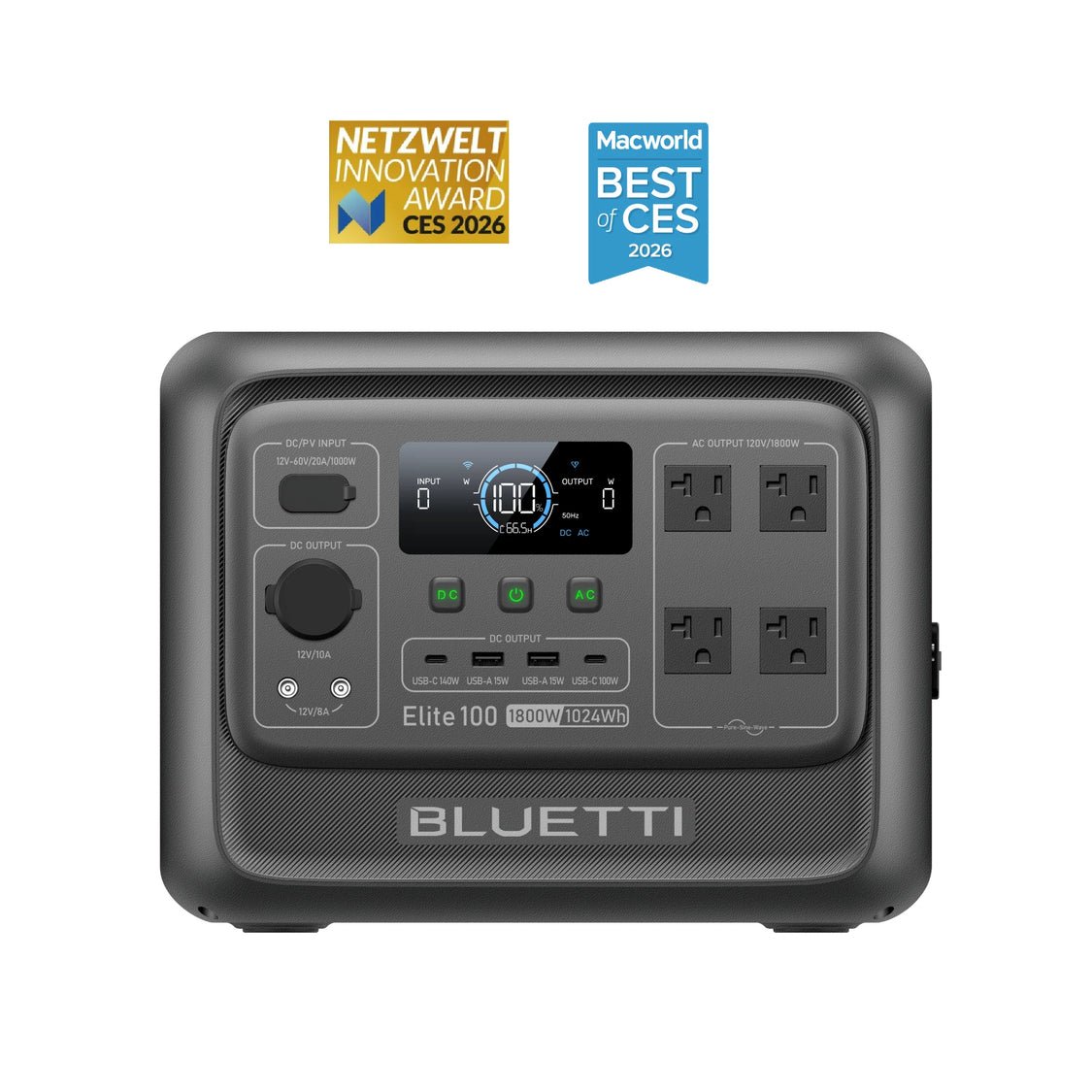
BLUETTI Elite 100 V2 — 1kWh camping class
BLUETTI specifies 1,024Wh capacity, 1,800W AC output and up to 1,000W solar input. At about 25 lb, it is the more portable choice for vehicle camping, short trips and lighter daily energy use.
The product page also offers solar-panel bundle variants, so you can match the battery with a portable panel rather than buying the station alone.
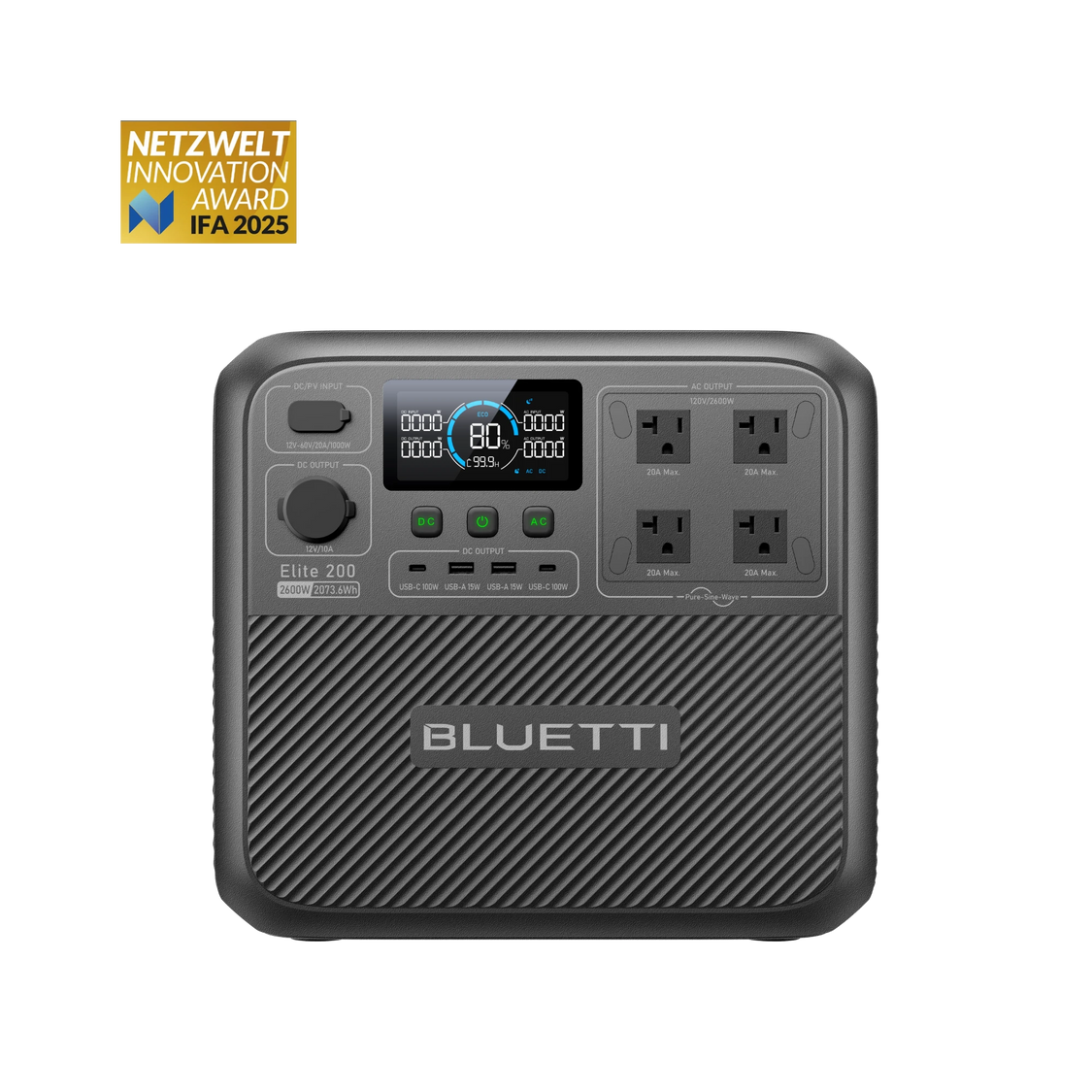
BLUETTI Elite 200 V2 — 2kWh camping class
BLUETTI specifies 2,073.6Wh capacity, 2,600W AC output and up to 1,000W solar input. At about 53.4 lb, it is better treated as a vehicle or base-camp power source than something you carry far from the car.
This class makes more sense when a fridge, laptop, CPAP, cooking appliance or several users push daily energy well beyond light-device charging.
Do not size solar from the power station’s maximum input alone
A 1,000W solar-input rating means the station can accept up to that limit under the specified voltage and current window. It does not mean you need 1,000W of panels. A smaller array may be enough if daily energy use is modest; a larger array can be useful when recharge time is critical and transport space allows it.
What reduces solar production at a campsite?
- Tree shade and partial shading across a panel
- Cloud cover and smoke or haze
- Poor panel angle
- High panel temperature
- Morning/evening operation outside peak sun
- Charging-controller and cable losses
- Solar input voltage/current limits of the power station
Frequently asked questions
What size solar generator do I need for camping?
Match the battery to your daily Wh and the solar array to the energy you need to replace. Around 1kWh is a useful portable class; around 2kWh gives more reserve for multi-day or higher-load camps.
Is 200W of solar enough for camping?
It can be for light loads, but the answer depends on daily Wh and available sun. If the campsite consumes close to 1kWh every day, a 200W panel may not replace that energy reliably in poor weather.
Can I use third-party solar panels?
Only if the panel or array stays within the power station’s permitted voltage, current and connector requirements. Check the exact model manual before connecting panels.
Should I buy a bigger battery or more solar?
Buy more battery when you need longer overnight/cloudy-day reserve. Add solar when the main problem is replacing daily energy during daylight. Many multi-day setups need both.
Build the load first, then choose battery + solar
Use the camping power-station guide to calculate Wh/day, then select the battery class and panel size as one system.
Specifications checked against BLUETTI US documentation on September 19, 2026. Prices, stock and bundles can change. Solar-production examples are planning estimates, not guaranteed output.
Featured photo credit: Erik Fabian / Unsplash.