Practical backup power planning
Choose a 2kWh power station around the loads you actually need to keep running.
Compare current 2kWh-class options for refrigerator backup, internet, lights, CPAP, RV use and other essentials during short outages.

Home backup planning · By Tony Pham · Updated September 14, 2026
A 2kWh-class portable power station can be a useful middle ground for refrigerators, communications, lighting, selected medical devices and other essential loads during a short outage—but battery capacity alone does not establish compatibility. Check continuous output, motor starting demand, usable AC energy and the actual hours each device will operate before buying.
Quick shortlist: choose by use case, not by battery size alone. The BLUETTI Elite 200 V2 is the current higher-output pick, the BLUETTI AC200L is the expandable pick, and the Renogy PowerStation 2000 is the TT-30/RV-oriented option when available.
Quick answer: what can a 2kWh power station run?
A 2kWh-class unit is usually most useful for essential-load backup rather than whole-home power. It can be a strong fit for a refrigerator, internet equipment, phones, laptops, lights, CPAP and selected small appliances—provided the inverter can handle the combined running load and any motor startup demand.
Who a 2kWh portable power station is for
Think of 2kWh as an energy class, not a promise of runtime. A refrigerator may cycle on and off, a sump pump may run only intermittently, and a CPAP or communications setup may draw far less power than a kitchen appliance. The same battery can therefore serve very different outage durations depending on the actual load profile.
Start with the Backup Power Map. Enter the devices that may overlap, their running watts, expected operating time and starting demand where applicable. For refrigerators, also use our refrigerator sizing guide. For sump pumps, use the sump-pump sizing guide.
Four checks before choosing a 2kWh unit
- Continuous AC output: add the running watts of loads that may operate at the same time.
- Starting demand: motors and compressors can require much more power briefly at startup. Compare the complete start event with the manufacturer’s overload specification and duration.
- Usable AC energy: nominal battery Wh is not the same as energy delivered at the AC outlet. Runtime depends on inverter losses, load level, temperature, state of charge and device cycling.
- Connections and operating mode: verify outlet current limits, pass-through behavior, transfer time, low-load shutdown, grounding and any special outlet you intend to use.
Current 2kWh options we track
The three options below are current examples from affiliate partners approved for When Grid Fails. They are not interchangeable recommendations; each has different strengths, and availability can change.
Higher-output 2kWh option
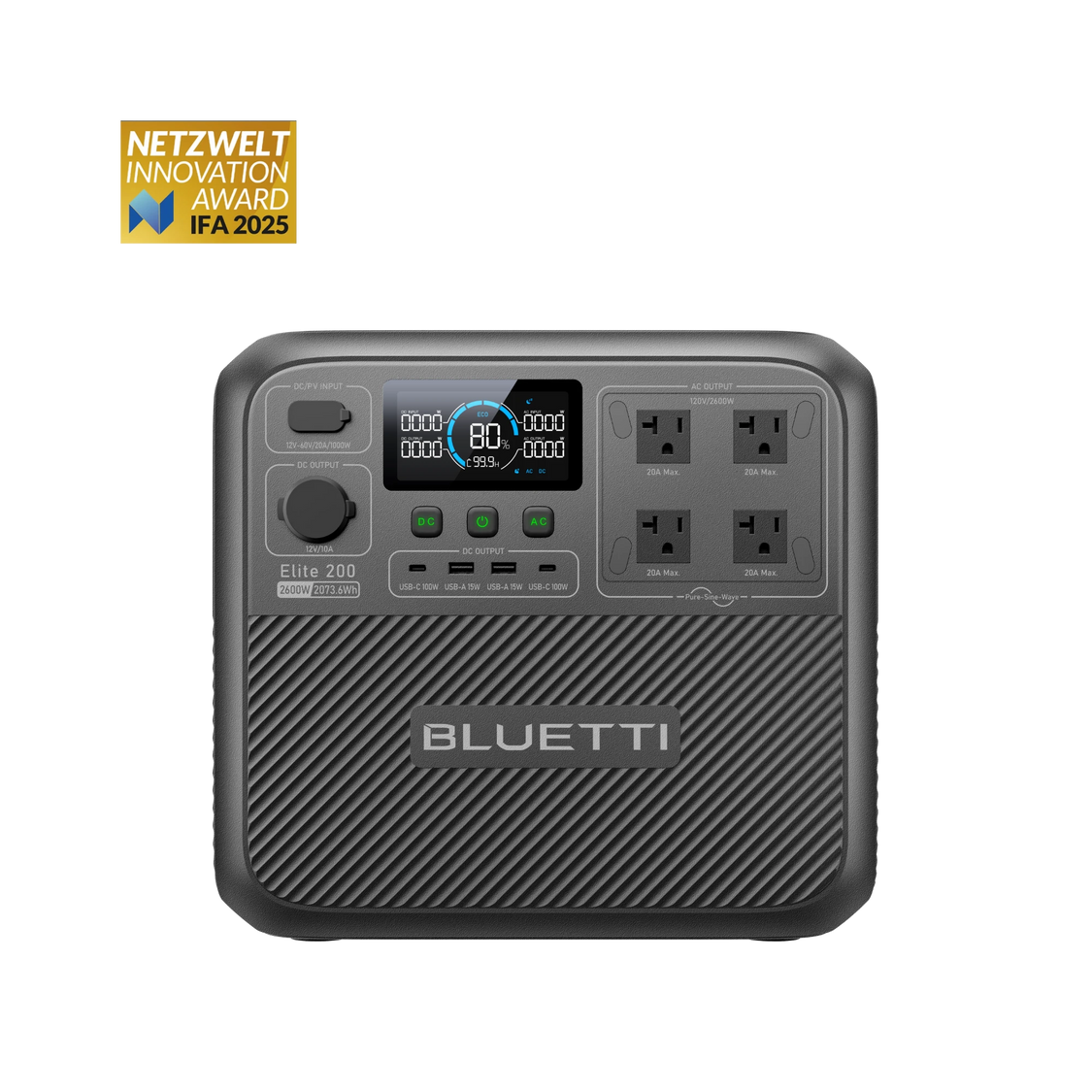
Current product: BLUETTI Elite 200 V2. The US model lists 2,073.6Wh capacity and 2,600W total AC output. BLUETTI also specifies up to 1,000W solar input and a UPS switchover time of 15ms or less. Manufacturer specifications.
See the current high-output 2kWh pick →
This slot can be updated when a better current model replaces it, without changing this guide’s URL.
Expandable 2kWh option
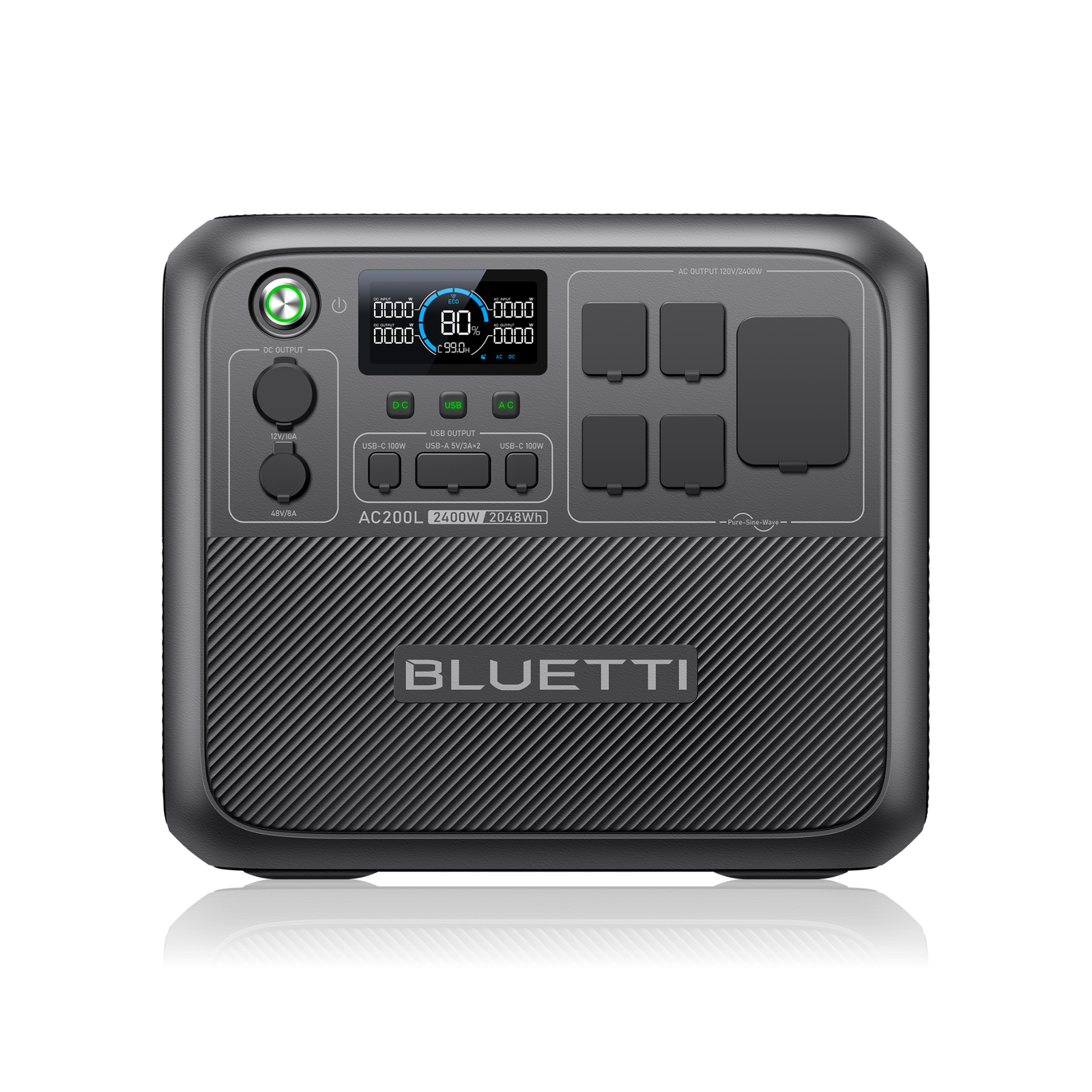
Current product: BLUETTI AC200L. BLUETTI lists 2,048Wh capacity, 2,400W AC output and expandable capacity up to 7,577.6Wh with compatible expansion batteries. It also supports up to 1,200W solar input. Manufacturer specifications.
See the current expandable 2kWh pick →
Best suited to buyers who expect to add battery capacity later instead of replacing the base unit.
2kWh option with built-in TT-30 for compatible RV use
Current product: Renogy PowerStation 2000. Renogy lists 2,048Wh capacity, 2,400W AC output, 3,600W advertised surge, a built-in TT-30 outlet and up to 1,200W DC/solar input. The manufacturer currently notes that the unit may be backordered, so check availability before relying on it for an immediate purchase. Manufacturer specifications.
How to plan an outage instead of buying by Wh alone
Suppose your essential loads consume 1,200Wh at the appliances during the outage. A 2,000Wh-class battery may appear to provide a large margin, but the remaining question is how much AC energy is actually available under your conditions. Keep the appliance-side requirement and the product-side usable-energy evidence separate until you have comparable data.
For motor loads, a second screen is required. A unit can have enough battery energy and still fail to start a pump or compressor if the inverter cannot support the start event. Conversely, a high-output inverter does not guarantee enough runtime.
Use our US Power Station Specifications page to compare published figures across models, then return to your load plan before purchasing.
Best use cases for a 2kWh unit
What we would choose first
If your priority is maximum AC output within the current 2kWh class we track, start with the high-output slot. If you expect to add battery capacity later, compare the expandable slot. If a built-in TT-30 outlet is important for a compatible RV setup, use the TT-30 slot when available. For refrigerator-only backup or very light loads, a smaller system may be more economical; for whole-home circuits or long outages, a 2kWh unit may be too small.
2kWh portable power station FAQ
Is 2kWh enough for a refrigerator?
Often, yes, but runtime depends on the refrigerator’s actual energy use, compressor cycling, ambient temperature and the power station’s usable AC energy. Check both startup demand and energy use rather than relying on battery Wh alone.
How long will a 2kWh power station run essential loads?
There is no single runtime. Add the watt-hours required by the devices you plan to run, then compare that requirement with evidence for usable AC energy under similar conditions.
Can a 2kWh unit run a microwave or coffee maker?
Many can if the inverter’s continuous output and outlet limits are high enough, but these loads consume energy quickly. Treat them as short-duration loads and verify the specific appliance rating.
Can I recharge a 2kWh power station with solar?
Many current models support solar input. Compare the unit’s input voltage/current limits and maximum solar wattage with the panel array you plan to use.
Is 2kWh enough for whole-home backup?
Usually not. A 2kWh portable system is better viewed as an essential-load solution. Whole-home circuits, central HVAC and long-duration outages generally require a larger system and code-compliant transfer equipment.
Build your load plan before you buy
If you are not sure whether 2kWh is the right size, calculate your actual loads first. If you already know your needs, compare the current picks above and choose the feature set that fits the use case.
Editorial basis: manufacturer-published specifications checked September 14, 2026. Prices, stock, firmware and bundles can change. Verify the current US model and seller terms before purchase. Portable power stations are not a substitute for code-compliant home transfer equipment.
Related current comparisons
Also compare the BLUETTI Elite 300, BLUETTI Apex 300 and our best solar generators for outages.
Not sure which backup power system fits your home?
Tell our Backup Power Sales Engineer what you need to keep running. We’ll estimate the load and match it against verified Renogy and BLUETTI specifications.
Ask the Sales Engineer →