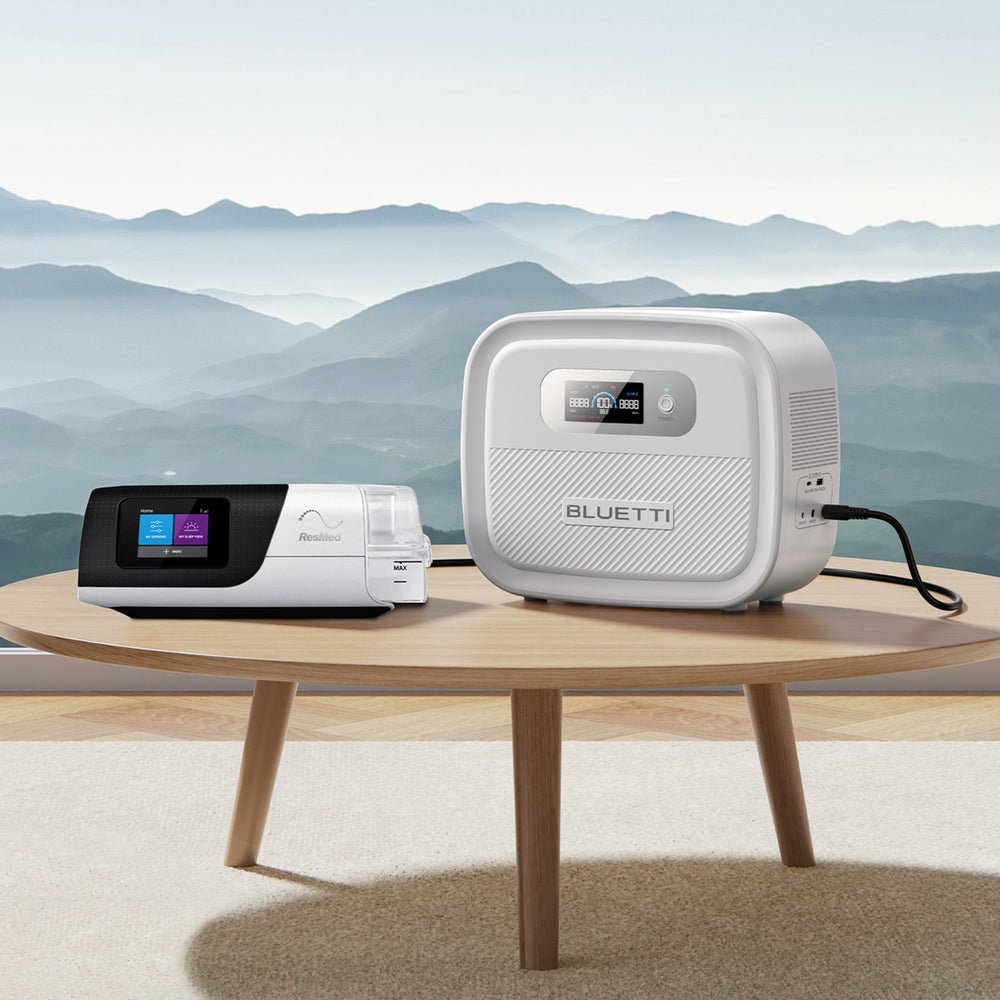
Health note: This page covers electrical backup planning, not treatment advice. Do not change prescribed CPAP settings to extend battery runtime. Verify backup-power compatibility with the CPAP manufacturer, and follow your clinician’s guidance if an interruption in therapy could create a health risk.
Quick answer: Size a CPAP battery backup from the exact machine’s power requirement and the number of hours you need it to run. Then verify voltage, connector, current, cable compatibility and whether the battery is intended for pass-through or UPS-style use. Humidification and heated tubing can materially change energy use, so do not size from a generic CPAP watt number.
CPAP battery backup: what you need to know first
A CPAP backup has two separate jobs: provide the correct electrical output for the machine and store enough energy for the planned sleep period or outage. Battery capacity in watt-hours does not prove compatibility by itself.
- Voltage and connector: the backup source must match the exact CPAP model and approved cable or adapter.
- Current and power: the source must meet the device’s required input under the intended operating mode.
- Energy: runtime depends on actual watt-hours consumed over time, not only the battery’s nameplate capacity.
- Operating features: humidifier, heated tubing, pressure settings and other functions can change consumption.
How to estimate CPAP battery runtime
Start with the machine’s own specifications or a representative power measurement. For a constant average load:
Required appliance energy (Wh) = average power (W) × operating time (hours)
If you have reliable evidence for how much usable energy a specific battery delivers through the chosen output, compare that delivered energy with the appliance-side requirement. Do not assume that every advertised battery Wh reaches the CPAP.
For example, if a measured setup averaged 35W for 8 hours, the appliance-side requirement would be 35 × 8 = 280Wh. That is an illustrative calculation only, not a typical CPAP load.
Dedicated CPAP battery or general portable power station?
Dedicated CPAP battery
Best suited when the CPAP is the main protected load and you value model-specific DC cables, compact size and overnight use. Exact compatibility still has to be checked.
Portable power station
More flexible when you also want to run a router, phones, lights or other small essential loads. AC conversion can add losses, and a larger station may be heavier than a dedicated CPAP battery.
If you need broader outage power, see our portable power station for home backup sizing guide.
Current BLUETTI CPAP battery options
The two models below are examples from BLUETTI’s current US CPAP-power lineup. We have not hands-on tested them.
BLUETTI X30
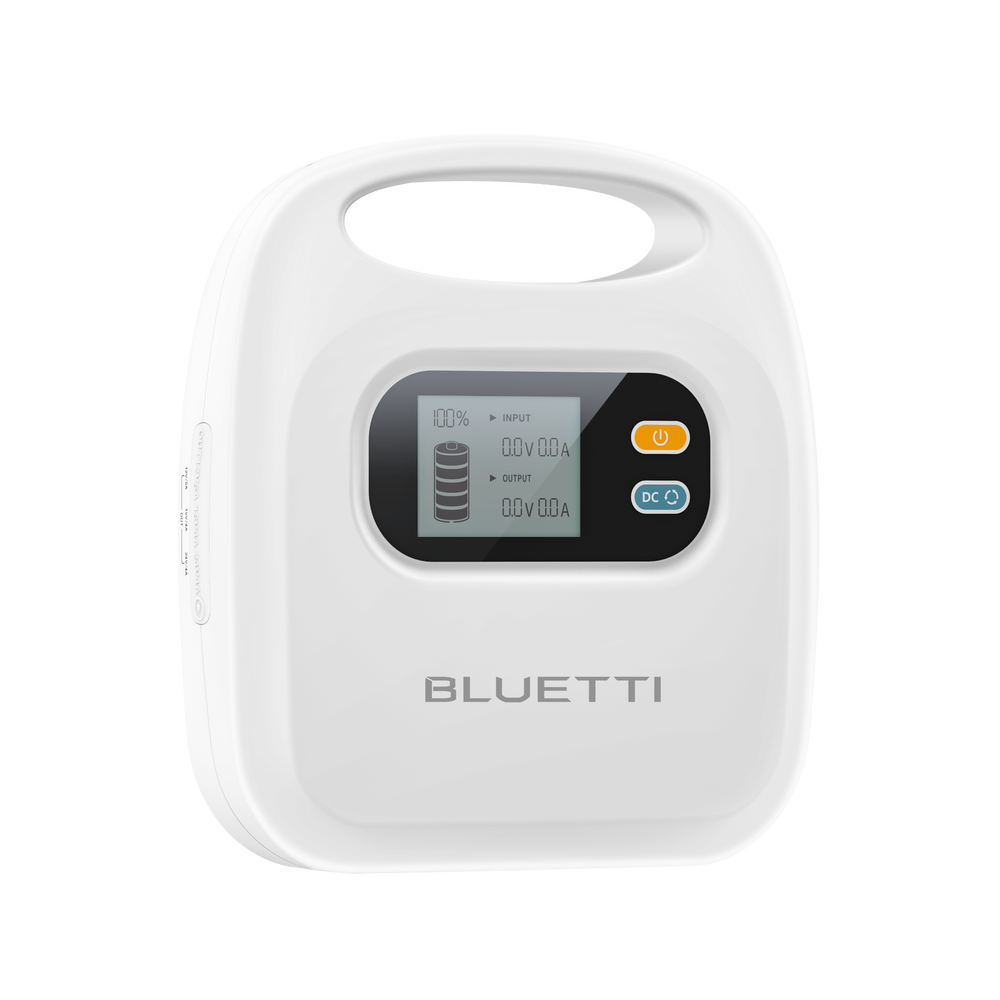
- Capacity: 297Wh
- Battery chemistry: ternary lithium
- DC outputs: 12V/5A, 15V/4A and 24V/4A
- USB-A: 5V/2.5A
- Weight: about 4 lb (1.8 kg)
- Manufacturer compatibility claim: designed for up to 90% of CPAP models, with included cables/connectors
- Air travel: BLUETTI lists the X30 as not TSA compliant
BLUETTI X60
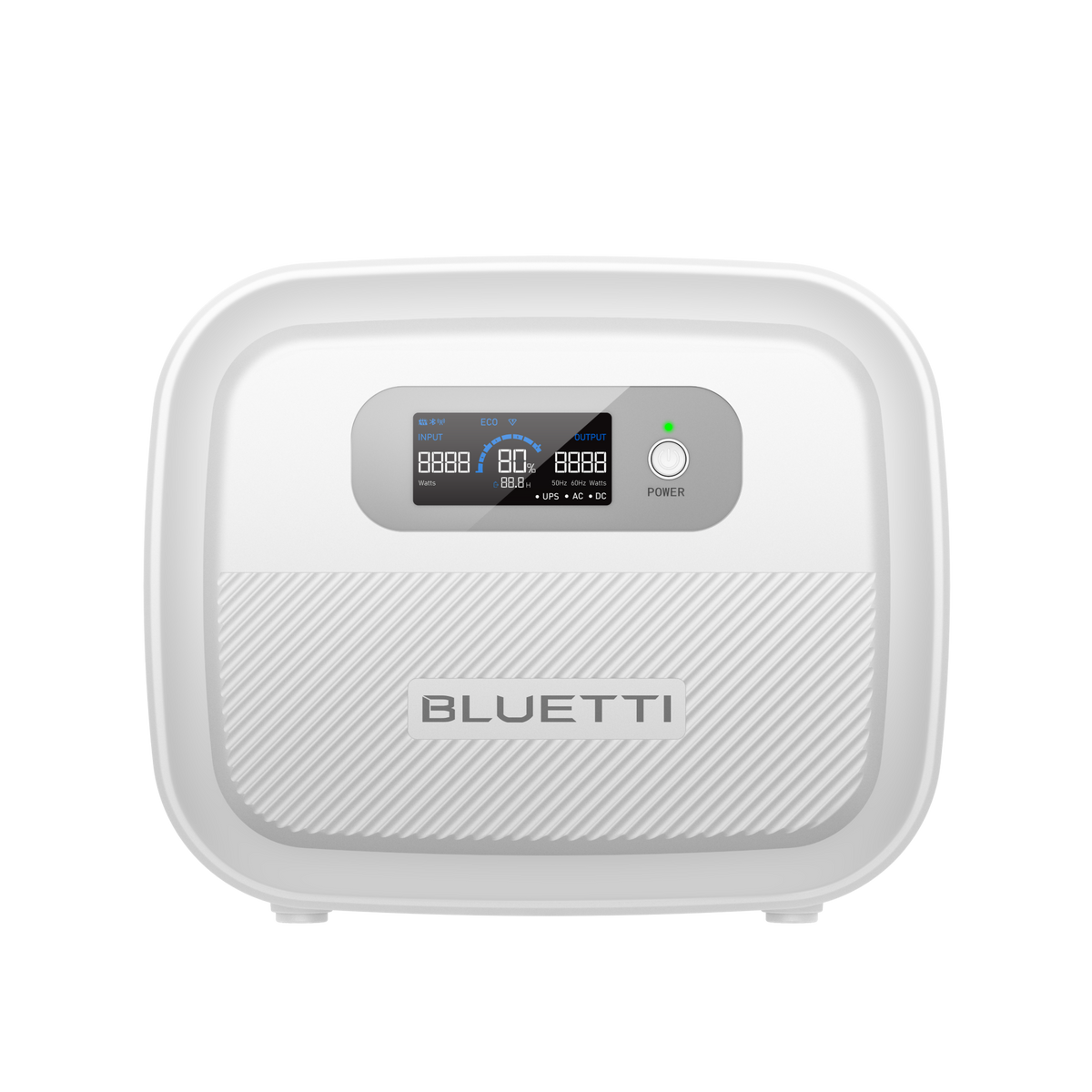
- Capacity: 614Wh
- Battery chemistry: LiFePO₄
- DC outputs: 12V/5A, 16V/4A and 24V/4A
- USB-C: up to 20V/5A with the required cable support
- Weight: about 15 lb (7 kg)
- Manufacturer compatibility claim: designed for up to 90% of CPAP models
- Air travel: BLUETTI lists the X60 as not TSA compliant
BLUETTI states that actual runtime varies with factors including pressure and humidity settings. Verify your exact CPAP model and cable before relying on it for an outage.
Do not choose by advertised runtime alone
Published runtime claims apply only to the conditions used by the manufacturer. Your CPAP model, pressure, humidification, heated tubing, battery state of charge and connection method can change the result. A direct-DC connection and an AC inverter path are not electrically identical.
CPAP backup for a power outage
For home outages, keep the backup charged and test the exact CPAP-and-battery combination before you need it. If you use a general portable power station, confirm that the AC output remains active for low overnight loads and that any transfer or pass-through behavior is appropriate for the equipment.
If an outage could interrupt medically necessary therapy, plan the contingency in advance with your CPAP supplier or clinician rather than relying on an untested battery setup.
CPAP backup for camping and travel
Camping adds recharge and temperature considerations. Air travel adds separate battery restrictions. BLUETTI currently marks both X30 and X60 as not TSA compliant, so do not assume either can be carried onto an aircraft. Check the airline and applicable battery rules for any travel battery you plan to fly with.
What to verify before buying
- Your exact CPAP model and input voltage.
- The required connector and approved cable.
- Whether your machine uses AC or can accept an approved DC connection.
- Your measured or manufacturer-documented energy use for the planned operating mode.
- Desired runtime plus an appropriate reserve for your situation.
- Charging method and recharge time after an outage.
- Whether you also need to power other essential devices.
For a broader brand comparison, see our BLUETTI power stations and solar generators guide. For multi-device home backup, start with the Backup Power Map.
Sources: BLUETTI US X30 and X60 product documentation checked September 19, 2026. Specifications, bundles and compatibility lists can change; verify the exact current model before purchase.