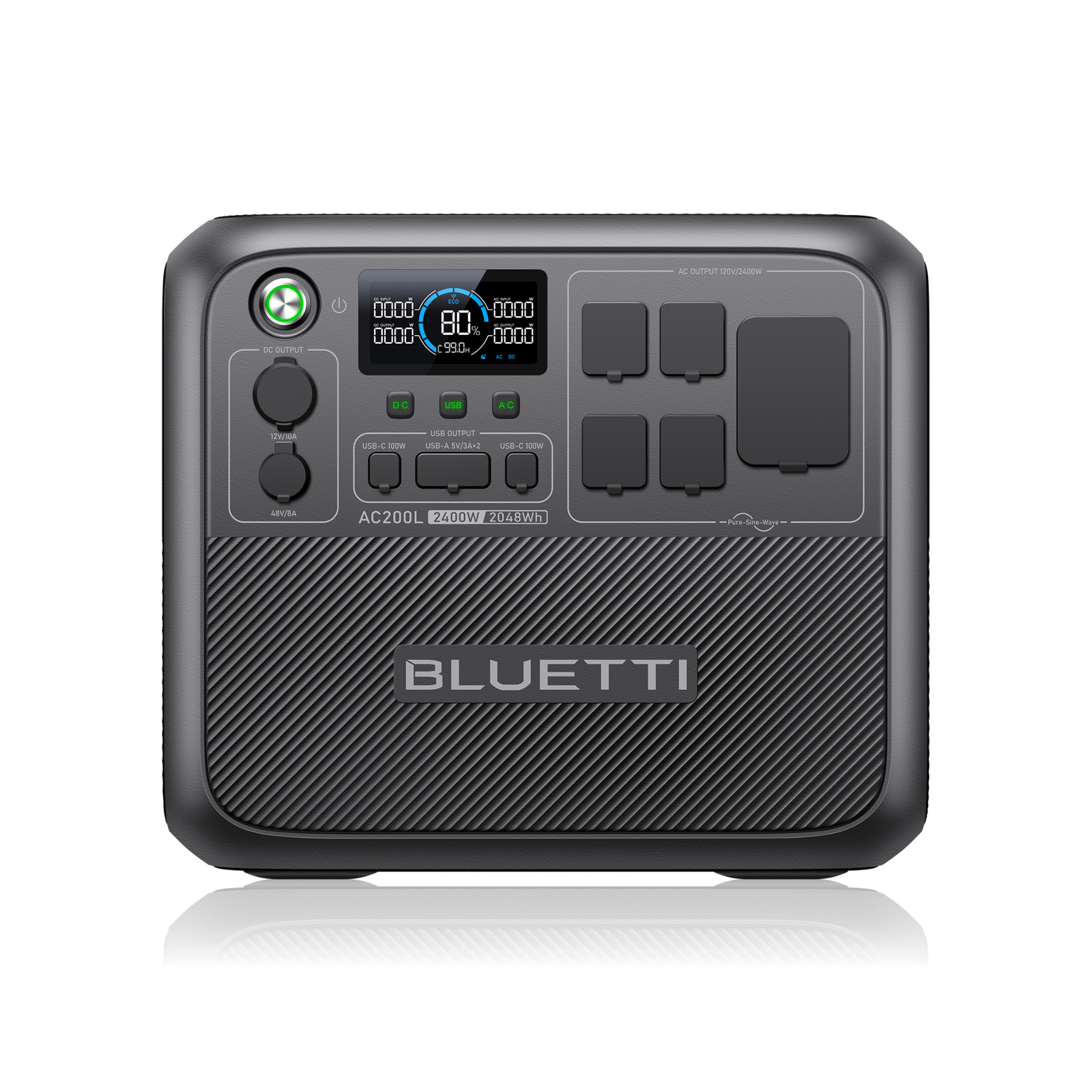
EcoFlow DELTA 2 Max and BLUETTI AC200L are both 2kWh-class systems, so the useful comparison is load fit, recharge and expansion—not brand alone.
EcoFlow DELTA 2 Max
EcoFlow lists 2,048Wh capacity, 2,400W AC output, 4,800W surge, dual solar inputs up to 1,000W total, and support for up to two compatible extra batteries.
BLUETTI AC200L alternative
AC200L is also a 2,048Wh-class expandable system with 2,400W continuous AC output. Your motor startup demand, outage duration and recharge plan should decide which class fits.
Buying decision: check fit first, then price
If both units are on your shortlist, use your actual loads to confirm that this 2kWh / 2,400W class is enough for the outage you are planning. Do not choose on brand alone.
1. Check your appliances in the Backup Power Map →
Availability update (November 1, 2026): BLUETTI US lists the AC200L as discontinued, so the old AC200L purchase link is no longer a viable buying path.
If you do not need the AC200L’s expansion capability or RV-specific outlets, consider the currently listed BLUETTI Elite 200 V2 (2,073.6Wh, 2,600W AC). It is not a like-for-like replacement: verify outlets, solar input, startup loads and runtime first.
2. Check BLUETTI Elite 200 V2 price & availability →
Need expandable storage or the AC200L’s TT-30 outlet? Continue comparing the DELTA 2 Max and other expandable or RV-ready models instead of assuming the Elite 200 V2 fits.
Affiliate disclosure: WhenGridFails may earn a commission at no extra cost to you. Technical fit comes first.
EcoFlow DELTA 2 Max vs BLUETTI AC200L: at a glance
| Buying factor | EcoFlow DELTA 2 Max | BLUETTI AC200L |
|---|---|---|
| Rated battery capacity | 2,048Wh | 2,048Wh |
| Continuous AC output | 2,400W | 2,400W |
| Expansion | Supports compatible extra batteries | Supports compatible expansion batteries |
| Solar charging | Up to 1,000W combined input | Check the current US manual for solar voltage/current limits and compatible panels |
| What decides the winner? | Your verified appliance startup demand, runtime target, recharging setup, total delivered cost and warranty | |
These are manufacturer-rated figures, not independent test results. Verify current US specifications and package contents before purchase. Neither 2,400W output rating guarantees that a specific refrigerator, pump or furnace blower will start.
How long can a 2,048Wh power station run appliances?
Use this planning formula: estimated runtime (hours) = rated Wh × usable-energy assumption ÷ average appliance watts. For illustration only, assume 80% of rated energy reaches the AC loads after losses and reserve. That gives approximately 1,638Wh available. A steady 100W load would run about 16.4 hours; a steady 500W load about 3.3 hours. Actual runtime changes with inverter efficiency, temperature, standby consumption and cycling loads. Measure refrigerator daily kWh rather than multiplying compressor nameplate watts by 24.
Which should you buy?
Choose neither yet if you have not checked startup watts, outlet voltage and daily watt-hours. If both fit, compare current US delivered price, return terms, warranty, compatible extra batteries and solar charging requirements. For motor-driven loads, confirm the manufacturer’s supported surge behavior instead of treating a headline surge number as a guarantee.
Need a starting point? Build your appliance load plan, read the refrigerator sizing guide, or compare BLUETTI Elite 200 V2 as another 2kWh-class option.
Decision rule
Compare continuous watts, verified startup surge, voltage, daily watt-hours, solar input and required expansion. See the 2kWh home-backup guide for the wider class.