Cold-weather RV battery guide
Self-heating and low-temperature protection solve different winter problems.
Choose capacity only after calculating daily watt-hours. Then choose temperature protection based on whether the battery must actually charge below freezing.

Independent planning guide · By Tony Pham · Updated September 15, 2026
Quick answer: a 100Ah battery stores about 1,280Wh at 12.8V, 200Ah stores about 2,560Wh, and 300Ah stores about 3,840Wh before system losses. Choose self-heating when you expect to recharge in freezing weather. Choose low-temperature cut-off when protecting the battery is more important than continuing to charge immediately.
Self-heating vs low-temperature protection
Self-heating
Internal heating elements warm the cells when activation conditions are met. This is the better fit when an RV, cabin or off-grid system must recharge during freezing weather.
Low-temperature cut-off
The battery management system stops charging or discharging outside permitted temperature limits. It protects the cells, but it does not warm them or guarantee immediate winter charging.
The key decision
If you can warm the battery compartment or wait for temperatures to rise, cut-off protection may be enough. If charging below 32°F is routine, self-heating is usually more practical.
Important: a heated battery still needs the charging source, current and installation conditions specified by the manufacturer. “Self-heating” does not mean unrestricted charging at every temperature.
100Ah vs 200Ah vs 300Ah
| Battery class | Nominal energy at 12.8V | Best fit | Main trade-off |
|---|---|---|---|
| 100Ah | About 1,280Wh | Lights, electronics, fans and efficient 12V refrigeration with frequent recharge | Limited reserve for long stays or inverter-heavy loads |
| 200Ah | About 2,560Wh | Longer stays, larger daily energy budget or more overnight reserve | Higher cost and longer recharge time |
| 300Ah | About 3,840Wh | Extended off-grid use, larger inverter loads or fewer charging opportunities | Higher purchase cost, weight and installation demands |
Use measured watt-hours whenever possible. Amp-hours alone do not show whether the battery can support your inverter: you must also verify BMS continuous current, surge current, cable size, fuse size and charger compatibility.
Three Renogy cold-weather battery routes
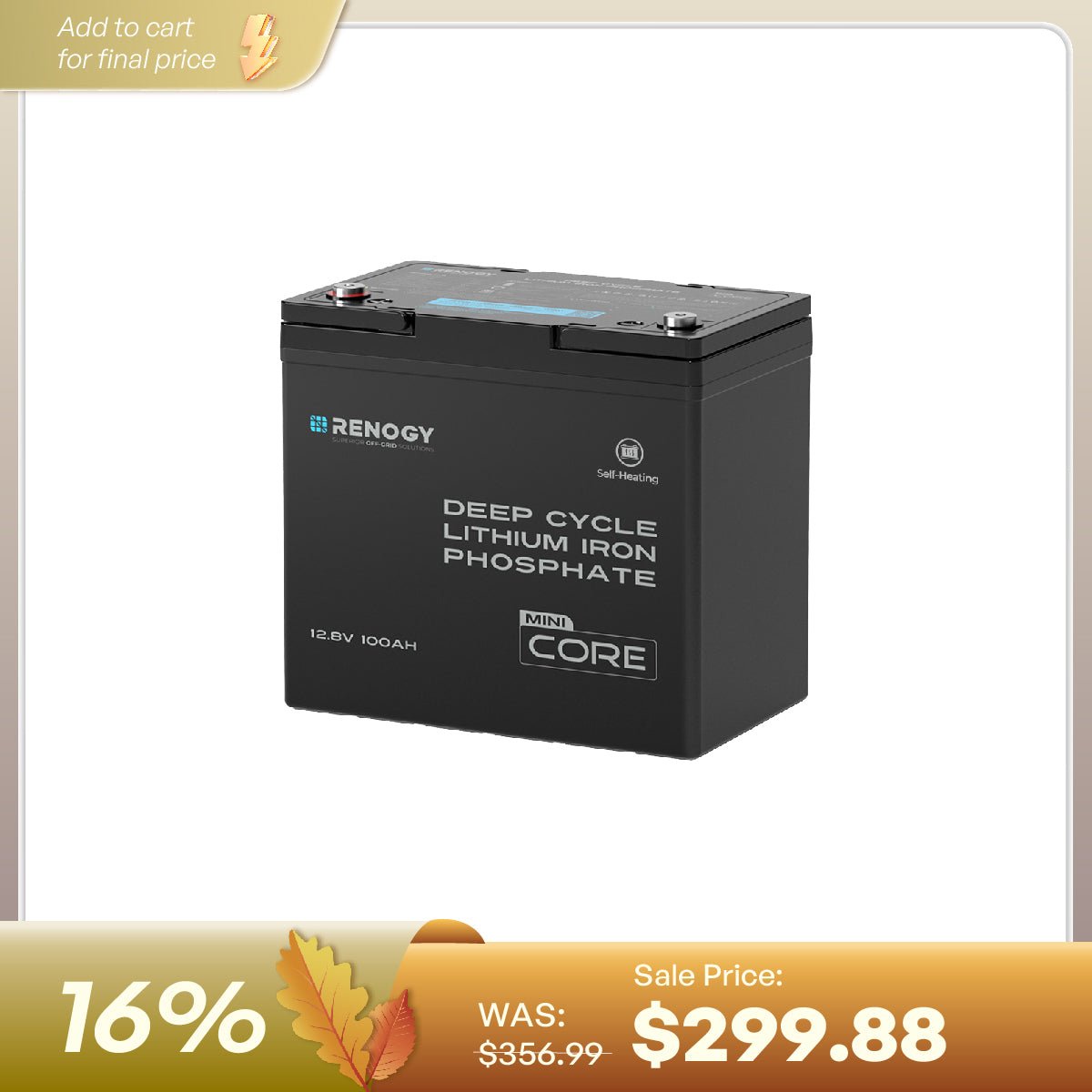
Best lower-cost cold-weather route
Renogy 12V 100Ah DuoHeat Core Mini
Renogy lists this compact model with low-temperature cut-off and DuoHeat self-heating technology. It is the logical starting point for a smaller RV energy budget when winter charging matters.
Choose it when: your daily consumption fits the 100Ah class and you can recharge frequently.
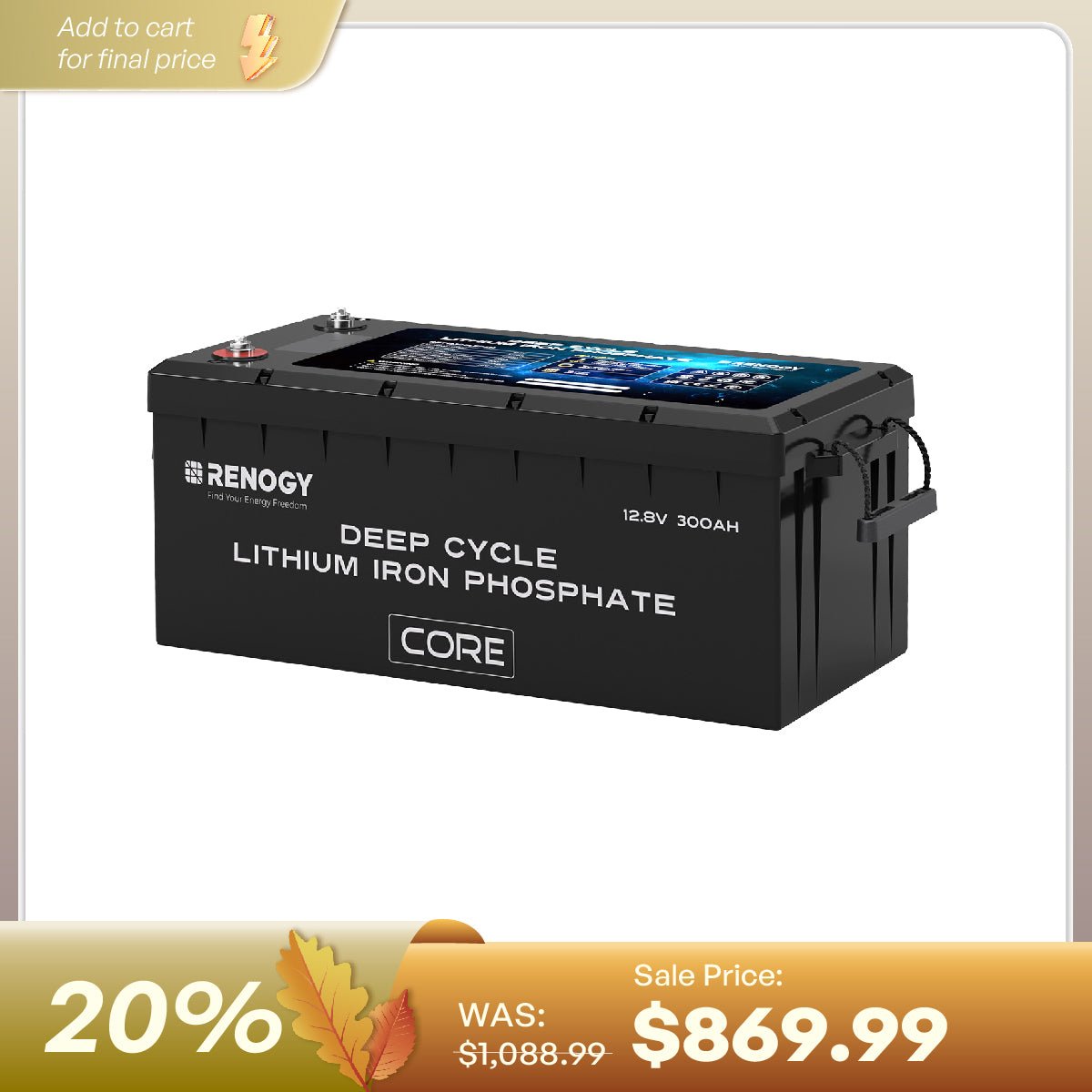
Best for high capacity plus winter charging
Renogy 12V 300Ah Core Self-Heating
Renogy publishes 3,840Wh nominal capacity, self-heating triggered around 32°F, and low-temperature protection. This is the strongest of the three routes when large capacity and cold-weather charging are both priorities.
Choose it when: your energy audit justifies 300Ah and the charging system can restore that capacity.
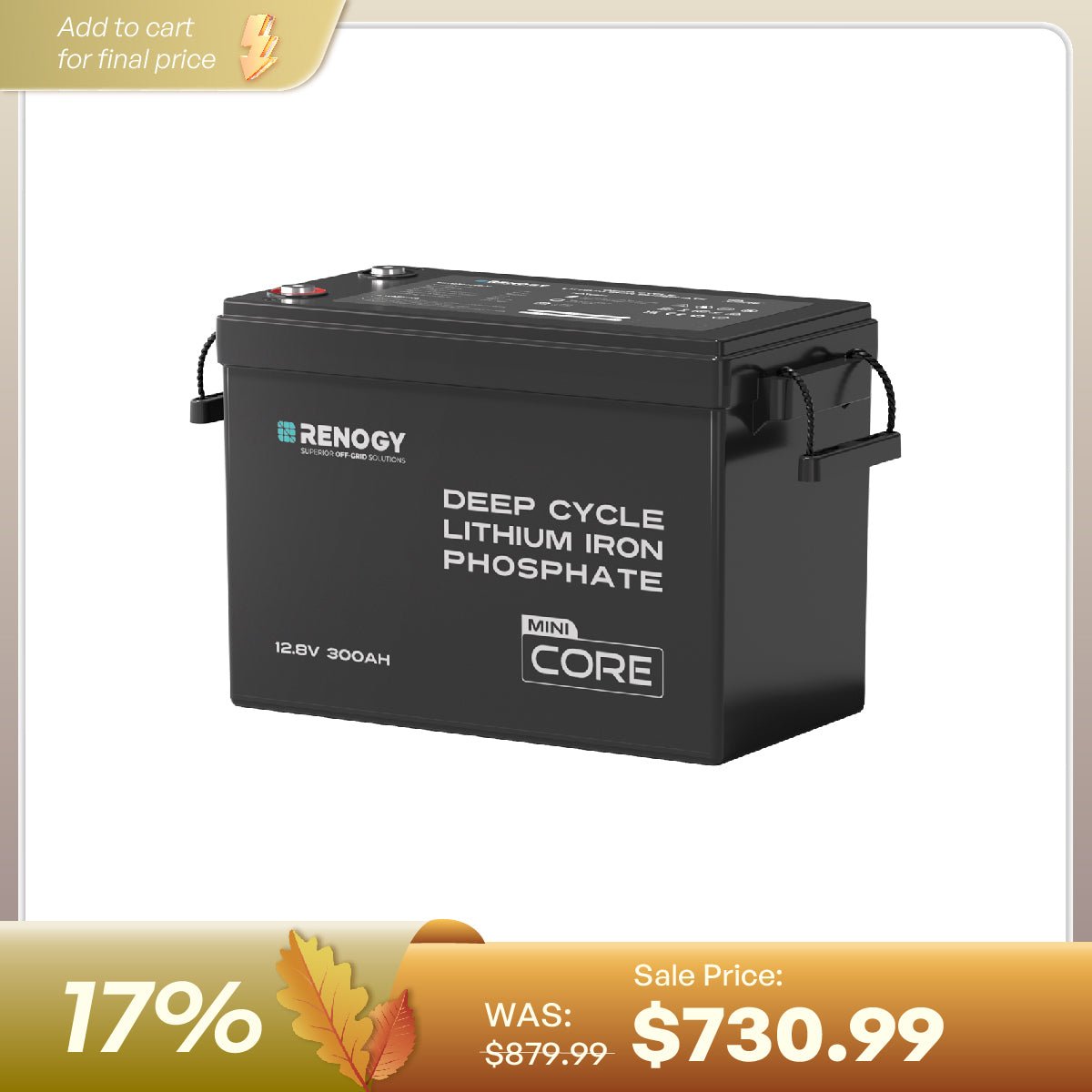
Best when protection matters more than heating
Renogy 12V 300Ah Core Mini Low-Temperature Protection
This model provides 3,840Wh nominal capacity and low-temperature cut-off in a compact battery. It is not the same buying proposition as a self-heating model: the protection can stop unsafe operation, but it does not warm the cells.
Choose it when: the battery can warm naturally or be installed in a temperature-managed compartment before charging.
Availability note: the manufacturer pages showed backorder status when this guide was updated. Stock, bundles and prices can change; use the buttons above to verify live availability before ordering.
Critical installation checks
- Calculate current: approximate inverter DC current is load watts ÷ (battery voltage × inverter efficiency). A 2,000W load at 12.8V and 90% efficiency is about 174A.
- Check the BMS: continuous and surge current ratings must support the inverter and motor-starting loads.
- Size conductors and protection: cables, fuses, disconnects and terminals must match the actual DC current and installation length.
- Verify charging sources: solar controller, shore charger and alternator charger need compatible lithium settings.
- Follow connection limits: confirm the exact model’s series, parallel and series-parallel rules before expanding a bank.
Frequently asked questions
Can I charge a LiFePO4 battery below 32°F?
Only within the temperature range and conditions specified for the exact battery. Low-temperature cut-off can stop unsafe charging; self-heating may warm cells before charging when its activation requirements are met.
Is 300Ah three times better than 100Ah?
It stores roughly three times the nominal energy, but it also costs more, weighs more and takes longer to recharge. It is better only when your load calculation and trip pattern require the capacity.
Is low-temperature protection the same as self-heating?
No. Cut-off protection prevents operation outside specified limits. Self-heating actively warms the cells under defined conditions.
How long will a 100Ah battery run an RV refrigerator?
Divide usable battery watt-hours by the refrigerator’s measured daily watt-hours, then include inverter loss if the refrigerator runs from AC power.
Buy the smallest battery bank that safely covers the load
The economical choice is the smallest capacity that covers daily energy plus reserve, supports inverter current and can be fully restored by the charging system.
Editorial basis: Renogy US manufacturer specifications checked September 15, 2026. Prices, stock, bundles and specifications can change. Verify the current model and seller terms before purchase. RV and home electrical work must follow applicable codes and manufacturer instructions.
Winter RV photo by Drew Dau on Unsplash.
Not sure which backup power system fits your home?
Tell our Backup Power Sales Engineer what you need to keep running. We’ll estimate the load and match it against verified Renogy and BLUETTI specifications.
Ask the Sales Engineer →