Editorial note: This comparison is based on published US specifications and use-case fit. Prices, bundles and stock change frequently, so use the current BLUETTI US offer page for final pricing.
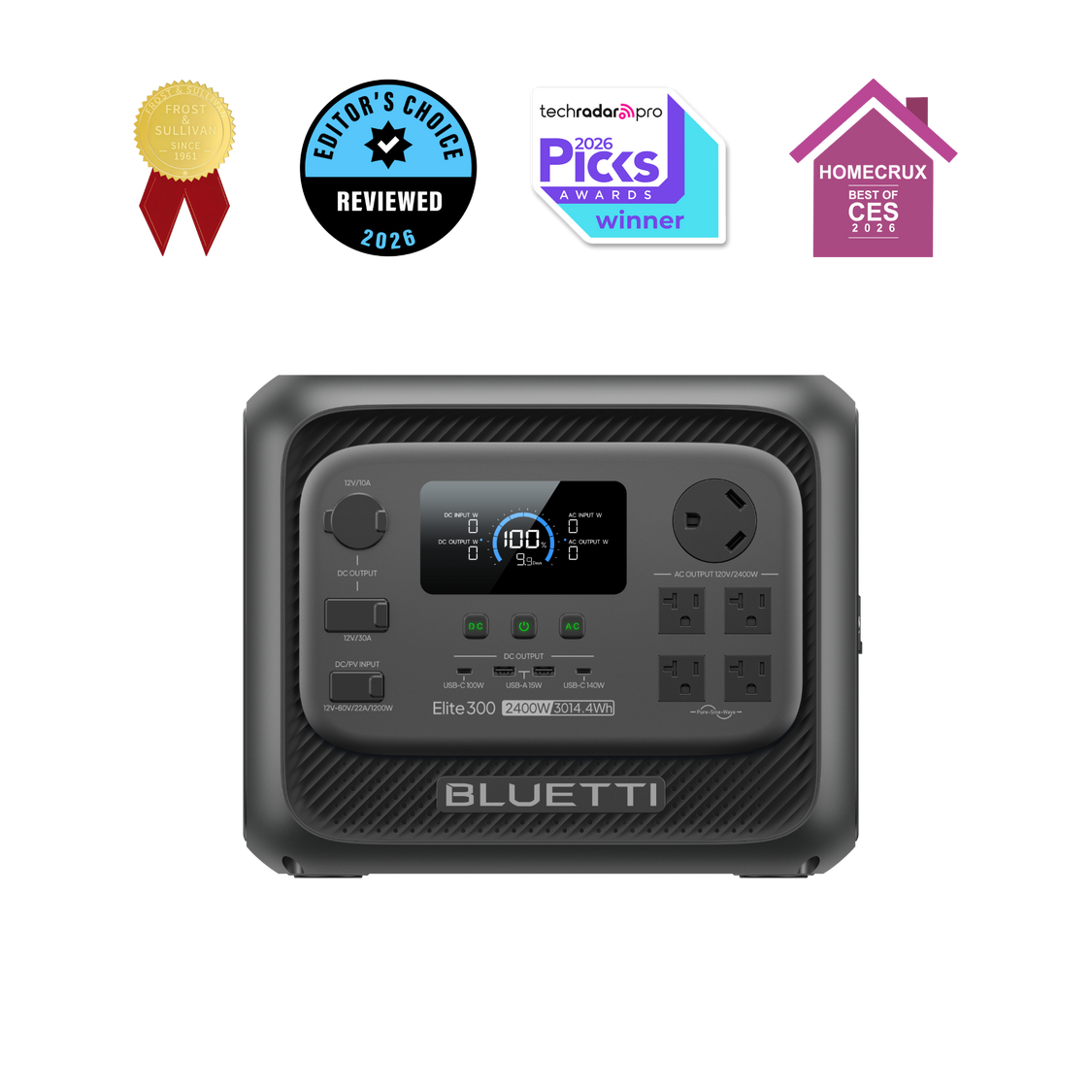
Quick answer: BLUETTI power stations cover very different jobs. A 1kWh-class model is easier to move for camping and light essentials; 2–3kWh models provide more outage runtime; higher-output expandable platforms make more sense when 240V, motor loads or future home integration matter.
BLUETTI power stations compared by use case
| Model | Published battery | Published AC output | Best fit |
|---|---|---|---|
| Elite 100 V2 | 1,024Wh | 1,800W | Camping, light home essentials, portable use |
| Elite 200 V2 | 2,073.6Wh | 2,600W | Multi-day camping, 2kWh home-backup class |
| Elite 300 | 3,014.4Wh | 2,400W | More stored energy, RV and selected home loads |
| Apex 300 | 2,764.8Wh | 3,840W | Higher output, 120V/240V pathway and expansion |
| AC200L | 2,048Wh | 2,400W | Expandable 2kWh-class portable backup |
What is a BLUETTI solar generator?
In this buying context, a BLUETTI solar generator is a compatible BLUETTI power station used with solar panels. The battery stores energy; the panels recharge it. The right bundle depends on daily watt-hours, the station’s permitted solar-input window and how quickly you need to replace energy during daylight.
For campsite sizing, use our solar generator for camping guide. For outage planning, use our solar generator for home backup guide.
Which BLUETTI power station should you start with?
Camping and portability
Start with the Elite 100 V2 when roughly 1kWh is enough and weight matters. Move to the Elite 200 V2 when daily energy, refrigeration or multi-day use justifies a heavier 2kWh-class system.
Home essential loads
Size the refrigerator, internet, lights, pumps and other essential loads first. The right model depends on both simultaneous watts and required watt-hours.
Higher output and 240V
Apex 300 is the current BLUETTI route on this site when output, expansion or 120V/240V architecture matters. Whole-home use still requires compatible integration hardware and a proper electrical design.
Searching for BLUETTI EB70, AC50S, EB150, EB240 or AC200P?
Those model names still appear in buyer searches, but they belong to older BLUETTI generations. Use the old model as a capacity/output reference, then compare a current system against your actual load.
Compare older BLUETTI models with current alternatives →
Current BLUETTI US links
These links go to the current BLUETTI US offer pages. Verify the final price, bundle contents and model before checkout. If you are not ready to buy, use the model names in the comparison table above to open the dedicated specs and buying guides first.
Shop by use case:
Elite 100 V2 — compact 1kWh class →
Elite 200 V2 — higher-output 2kWh class →
Apex 300 — expandable home backup →
Do not choose by watt-hours alone
Battery capacity answers only the energy question. Also check continuous output, startup behavior, output voltage, outlet limits, recharge rate, solar-input voltage/current range, weight and whether expansion or transfer equipment is required.
For refrigerator-only automatic backup, compare BLUETTI FridgePower. For broader outage planning, start with the Backup Power Map.
Bottom line
The useful way to compare BLUETTI power stations is by the job they must do: portable camping, selected home essentials, longer 2–3kWh backup, refrigerator-specific automatic backup or expandable 240V-capable home power. Size the load first, then compare the smallest model class that meets both output and energy requirements.