Solar generator for home · Buying guide
Match the battery, inverter and solar array as one system.
A solar generator is useful only when every part of the chain fits: appliance demand, inverter capability, battery energy and realistic solar harvest.

Independent planning guide · By Tony Pham · Updated September 14, 2026
For home backup, prioritize reliable AC output and enough battery for the first night. Treat solar as a variable recharge source—not a guaranteed daily refill—and verify panel voltage, current and connector compatibility.
How to size a solar generator for home use
Begin with appliance energy, then size the inverter for simultaneous running load and startup events. Finally, determine whether the planned solar array can fit the product’s input window and restore the energy used.
AC output
Add loads that can overlap and check motor or compressor starts. High advertised lifting modes are not a substitute for normal continuous output.
Battery energy
Use nominal Wh for screening, then look for usable AC-energy evidence. Reserve matters when the next sunny recharge is uncertain.
Solar recharge
Panel nameplate watts are not daily energy. Sun angle, shade, heat, clouds and input clipping reduce harvest.
For appliance examples, see our refrigerator sizing guide and sump-pump guide.
Current solar-generator candidates
Choose the power station first; add a compatible panel only after checking the complete input specification.
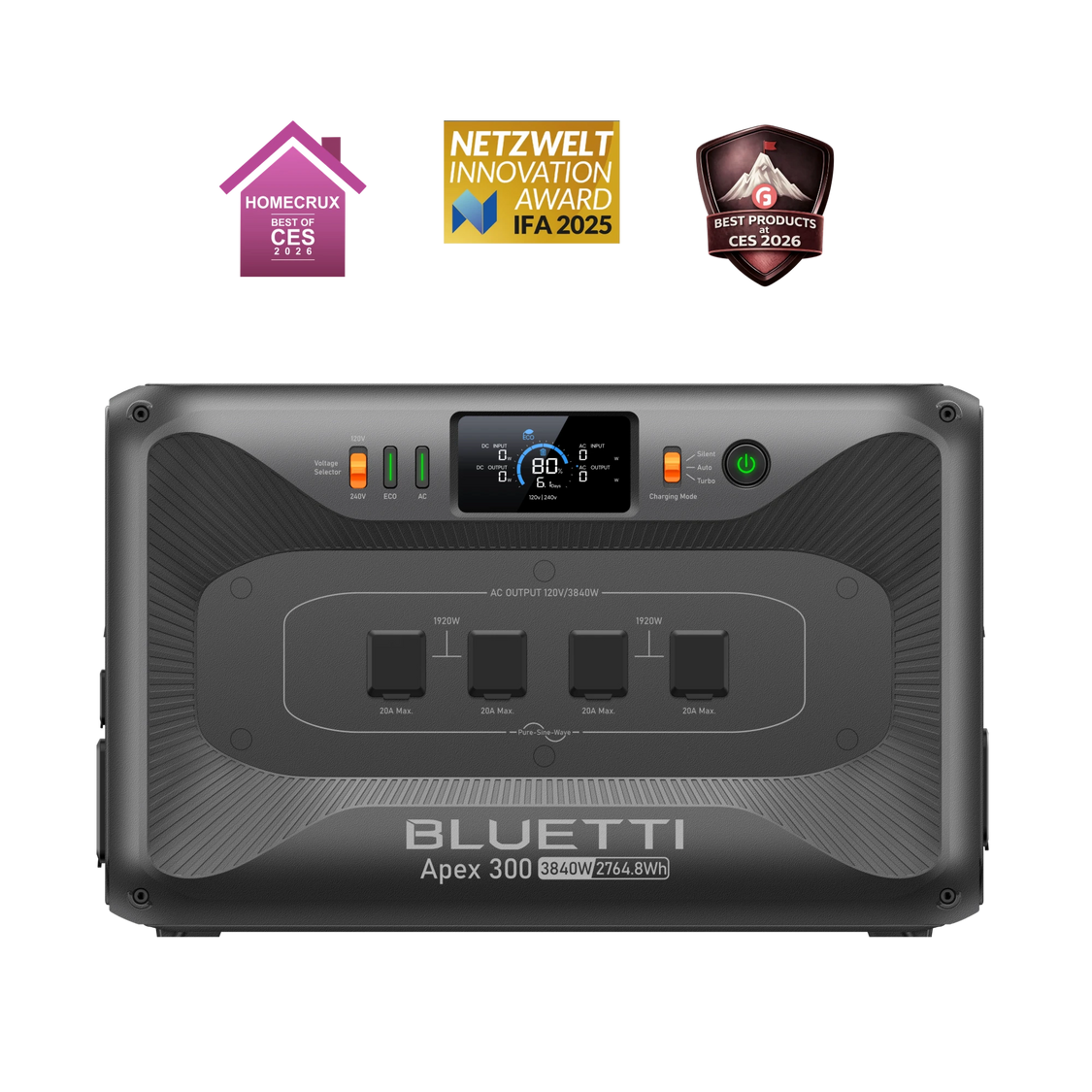
BLUETTI Apex 300
BLUETTI lists 3,840W output and 2,764.8Wh for the base unit, with expansion and optional higher-power solar integration. Manufacturer specifications reviewed on BLUETTI US.
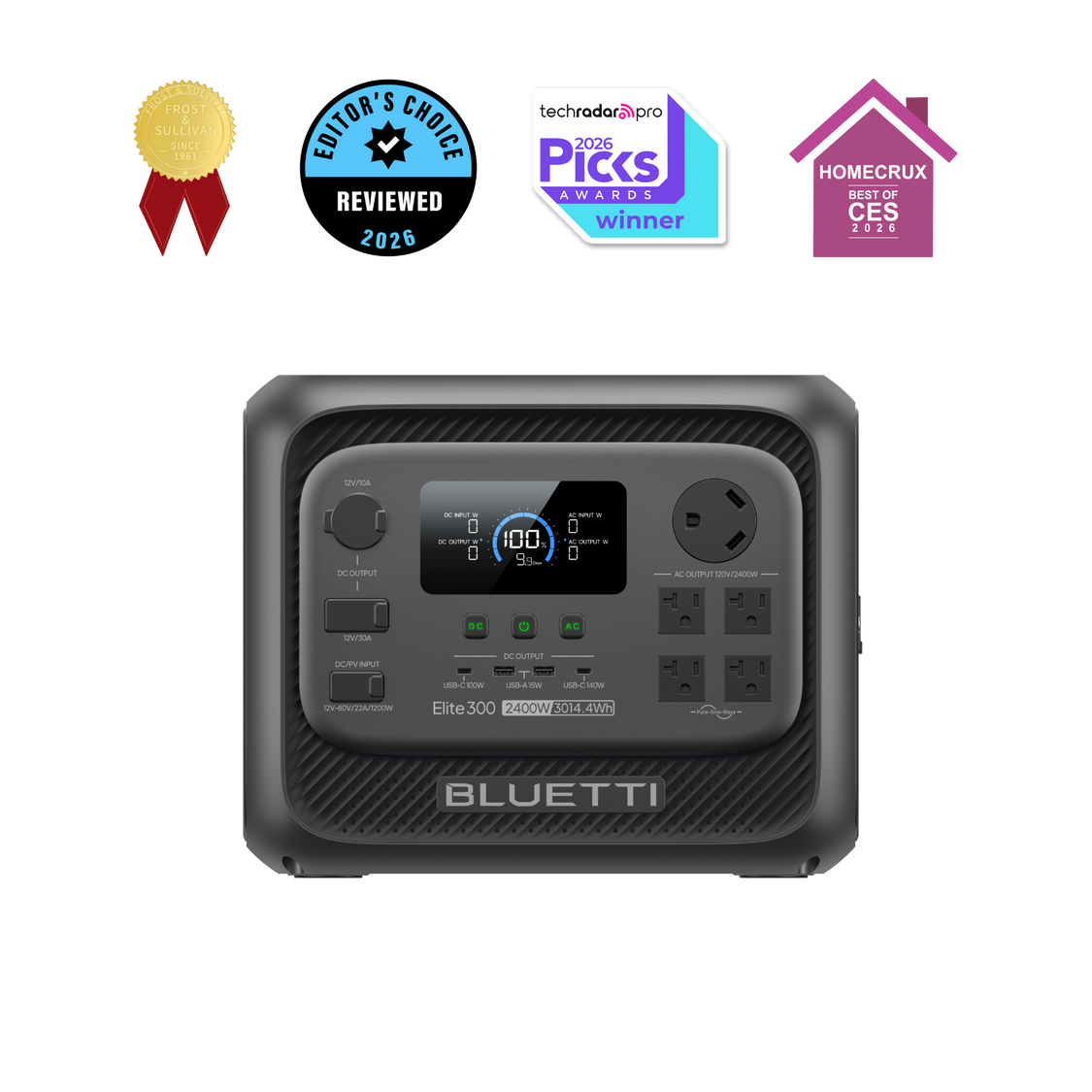
BLUETTI Elite 300
BLUETTI lists 3,014.4Wh capacity, 2,400W output and support for wall, solar and vehicle charging. Manufacturer specifications.
Solar is not an outage-duration guarantee
A panel rated at 300W will rarely deliver 300W all day. Plan using local peak-sun conditions and include losses. Keep a non-solar recharge path if the protected load is critical.
Confirm open-circuit voltage, operating voltage, current and maximum input—not just watts. An electrically incompatible array can fail to charge or damage equipment.
Frequently asked questions
What size solar generator is best for home backup?
The best size is the smallest system that can start all planned loads and provide their required Wh with reserve.
Can solar recharge a power station during a blackout?
Yes, with compatible panels and adequate conditions. Daily energy harvest varies, so it should not be treated as guaranteed.
Is a solar generator the same as whole-home solar?
No. A portable solar generator combines a battery and inverter; whole-home systems normally involve fixed arrays, transfer equipment and professional installation.
Size the loads, then size the solar
Use the calculator to define what the battery must deliver before comparing panel bundles or promotional wattage.
Editorial basis: manufacturer-published US specifications checked September 14, 2026. Prices, bundles, stock and firmware can change. Verify the current model and seller terms before purchase. Home electrical connections must follow applicable codes and manufacturer instructions.
Not sure which backup power system fits your home?
Tell our Backup Power Sales Engineer what you need to keep running. We’ll estimate the load and match it against verified Renogy and BLUETTI specifications.
Ask the Sales Engineer →