Home battery backup · Decision guide
Choose the system around essential circuits—not the size of the house.
The right home battery backup may be a portable unit for selected appliances, an expandable system, or professionally installed whole-home storage.

Independent planning guide · By Tony Pham · Updated September 14, 2026
Most buyers should define essential loads first. A portable or expandable system is often the economical starting point for refrigerator, internet, lighting and selected devices; whole-home backup is a different project involving higher power, more energy and code-compliant integration.
Three levels of home battery backup
Start by deciding what must continue during an outage. Avoid paying to support electric heating, central air or every branch circuit if the real goal is food, communications, lighting and one critical pump.
Portable essentials
About 1–3kWh can cover selected loads, depending on actual energy use. Extension-cord use is simple but requires manual setup.
Expandable backup
A modular system lets you add batteries later. Check expansion limits, recharge sources and whether the ecosystem locks you into proprietary accessories.
Whole-home integration
240V loads and automatic circuit backup can require panels, hubs, permits and licensed electrical work. Product price is only part of installed cost.
Build an appliance-side plan with the Backup Power Map, then compare published US specifications on our specifications page.
Current home-backup routes
These partner options cover different levels of the decision rather than ranking every product as interchangeable.
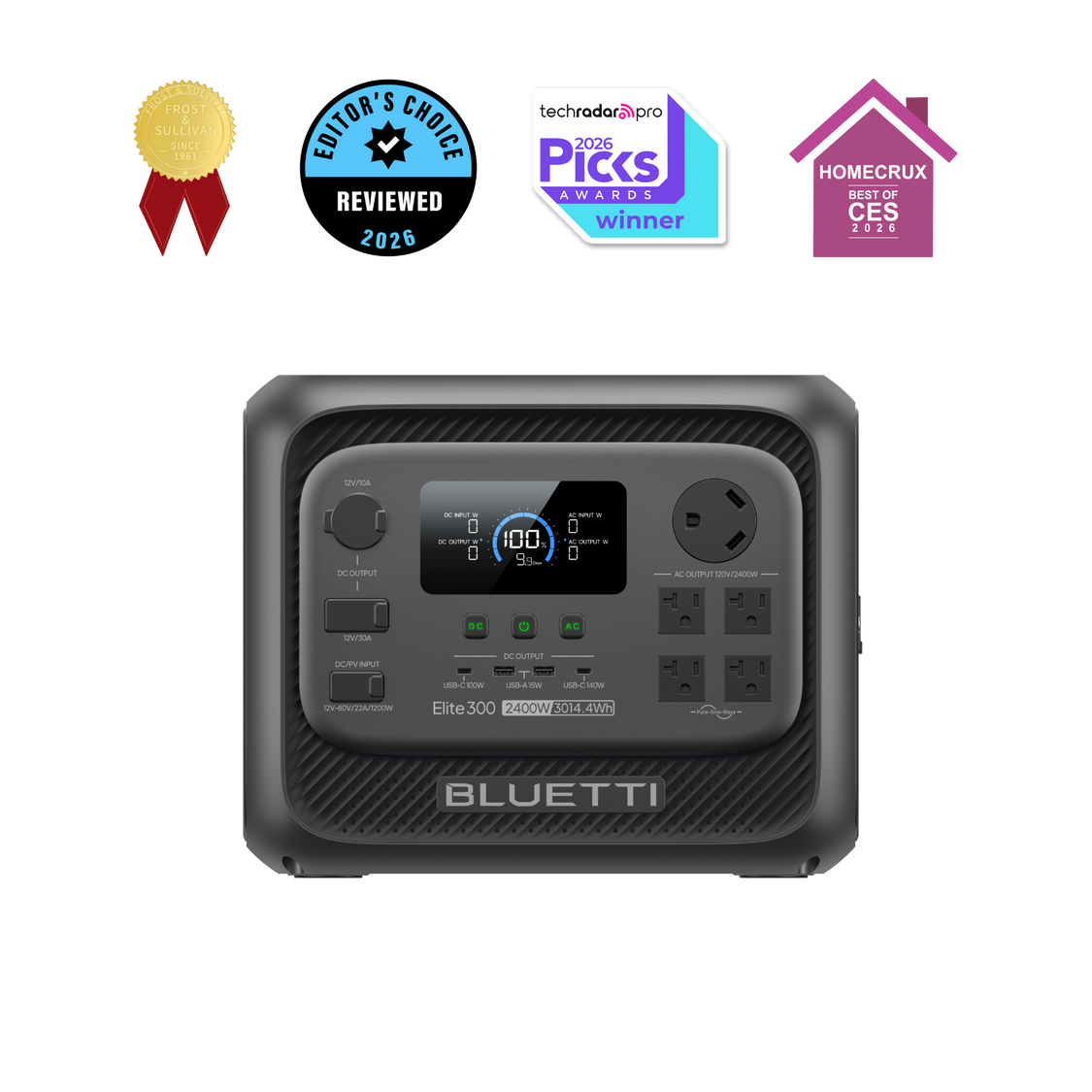
BLUETTI Elite 300
A compact 3kWh-class option listed at 3,014.4Wh and 2,400W, suited to selected essential loads and RV use. Manufacturer specifications.
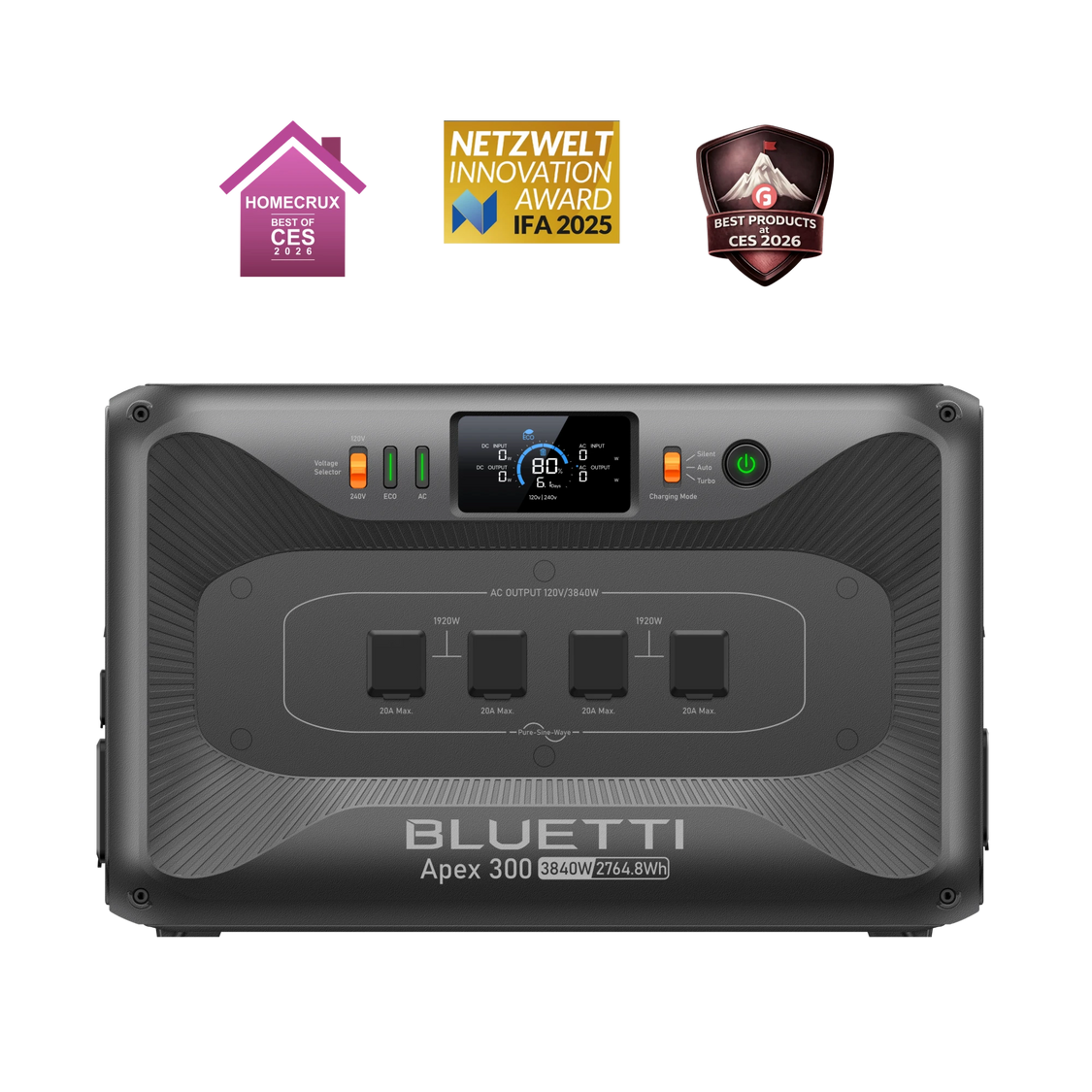
BLUETTI Apex 300
An expandable 120V/240V-capable platform listed at 2,764.8Wh and 3,840W for the base unit, with optional home-integration components. Manufacturer specifications.
Installation and runtime limits
Portable outlets are not the same as whole-home transfer equipment. Never connect a power station to household wiring through an improvised cord. Use listed equipment and qualified installation where circuits are involved.
Runtime depends on usable delivered energy, device cycling and temperature. Leave reserve for changing conditions and a recharge plan for multi-day outages.
Frequently asked questions
How much battery backup does a home need?
Add the watt-hours of essential loads over the required outage period, then account for conversion loss and reserve. The answer varies far more by loads than by floor area.
Can a portable power station back up a house?
It can support selected appliances directly. Backing up home circuits or 240V loads requires compatible, code-compliant integration.
Is solar necessary?
No for a short outage if the battery starts full. Solar or another recharge source becomes more important as outage duration grows.
Define essential loads first
A smaller, well-sized system often provides better value than buying a nominally whole-home package without a load and runtime plan.
Editorial basis: manufacturer-published US specifications checked September 14, 2026. Prices, bundles, stock and firmware can change. Verify the current model and seller terms before purchase. Home electrical connections must follow applicable codes and manufacturer instructions.
Not sure which backup power system fits your home?
Tell our Backup Power Sales Engineer what you need to keep running. We’ll estimate the load and match it against verified Renogy and BLUETTI specifications.
Ask the Sales Engineer →